Infrastructure surrounds all of us, and is the backbone of any civilization. We're dependent on roads to get where we want, power lines to be able to charge our devices, and pipelines to get clean drinking water directly from the tap. When all this works, most people do not think about it much. But when it doesn't, it quickly becomes critical. Sometimes it's almost easy to forget that all this infrastructure has not been here forever.
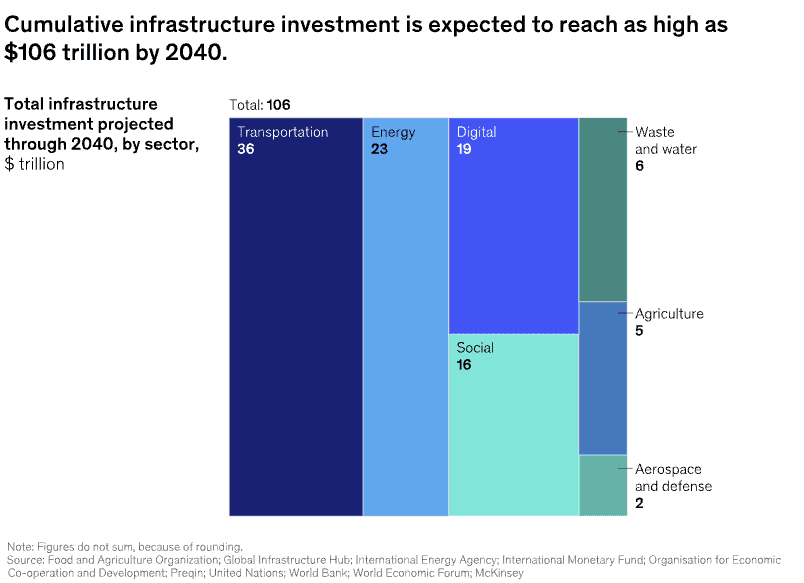
We are in what McKinsey describes as an “infrastructure moment,” with the world expected to need around $106 trillion in infrastructure investment by 2040 [1].
The next decade will be a defining one for global infrastructure. Those who act decisively today will shape the future of connectivity, economic growth, and societal well-being for generations to come.
— McKinsey [1]
But first, a road must be built. And before that, it has to be designed and planned. And that's where the challenge begins.
The decisions made early are paid for later
The global construction industry is definitely facing its challenges [2]. The persistent issues of project delays and cost overruns continue to haunt the under-digitalized construction sector.
A recent assessment by the Northern Ireland Audit Office found that cost overruns across eleven major capital projects totaled approximately £1.94 billion, with an average delay of six years [3]. Pretty sad statistics — but at the same time an incredible opportunity for improvement. But where do we start?
I'd say we should start at the beginning. Early design decisions have major cost impacts, and visualizing those impacts before decisions are made is becoming increasingly important [4]. As the leading Nordic research institute SINTEF points out, the early design stages have a high impact on final project performance and also require trade-offs between risks, environmental impact and social impact — in addition to costs [5].
In other words: if we want better project outcomes, we need better early-stage design. We need data-driven decision-making to inform the process.
Manual processes and legacy tools are still dominating this industry
After working a decade in one of the leading Nordic engineering firms, I realized that we cannot keep on doing design and planning the same way. With the same tools and workflows we had been doing for decades. Trial and error. Hit and miss. Manual steps. Siloed.
It was long overdue to get better tools for optioneering, optimization and early-stage design.
Working with BIM management and digital transformation, I saw how important it was to make the transition from on-premise to the cloud. Stakeholders and project managers were suddenly interacting in a much more efficient way. Yet, the early-stage design mostly relied on on-premise software. And data hidden in reports — you know that cell, in that table, in one of the hundred documents in the project. The time it took to make an idea for a new proposal into an understandable and accessible basis for decision makers, almost made me embarrassed of being an engineer. Having to use many different tools (CAD, BIM, GIS, CDE and spreadsheets), and involve multiple people in the making, really can take the motivation away from even the most creative engineers among us. Too often, I found myself asking: did we actually find the best solution, or simply the best solution we had time to investigate?
Talented engineers are limited by clunky tools and processes
Too often we limit ourselves. Instead of broadly looking for alternatives, with the different project outcome and objectives on top of mind, we end up manually making a few alternatives, and pick the best one among these. An industry outsider could sometimes be surprised by how manually these technical experts still operate, and just how messy the data they rely on tends to be.
Quite a few years ago, we spent a lot of effort to implement BIM into the design phase. However, too often the introduction of BIM ended up in a “tagging game”, to add some attributes to our 3D-models that often were also quite manually read by someone in a model viewer. BIM became a new way of documenting design. Now it is time to improve how we actually come up with the design.
Using the right tools for the purpose is critical
A good early-stage design process should involve creating and exploring multiple options, assessing them sufficiently based on available data and project objectives, and involving stakeholders early enough to make the process transparent and defensible.
Project owners should use precise selection criteria to ensure that proposed projects meet specific goals, develop sophisticated methods for determining costs and benefits, and evaluate and prioritize projects by their potential effects on the entire network, instead of looking at individual projects in isolation.
— McKinsey [1]
Making the right decisions early will affect the outcome later — at scale. The tools needed to do this efficiently are not necessarily the same tools we use for detailed design. Yet today, many firms are still using the same tool for concept development, optioneering and optimization as they do for detailed design. A painter would never use the same brush for painting a large wall in broad strokes as he would for the details around the windows. And neither should we engineers. That's why I quit my job as a civil engineer.
Starting five years ago with a fundamental belief that early-stage planning could be dramatically improved in one hand, and pretty detailed ideas for new tools in the other.
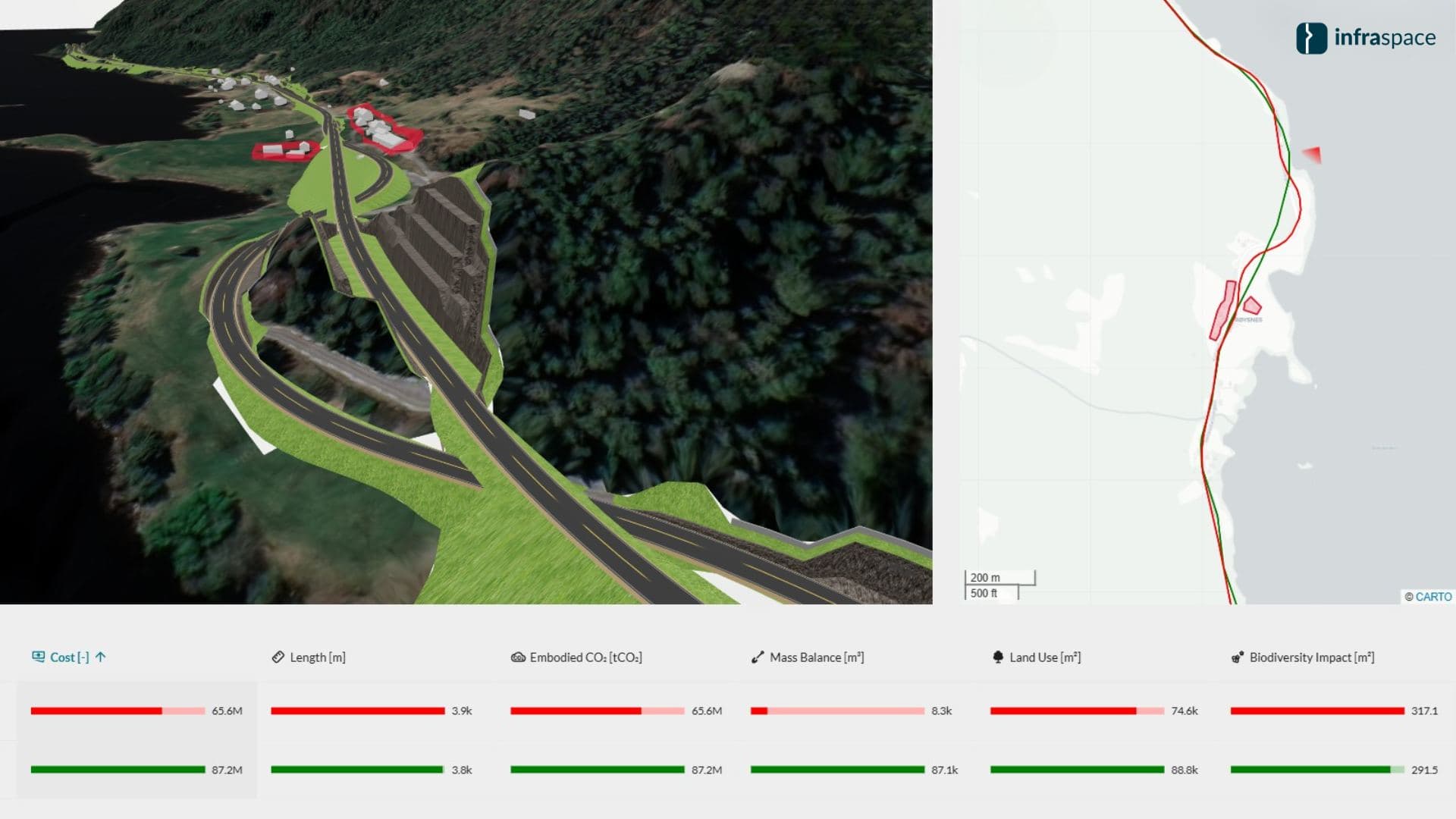
By joining forces with other civil engineers, mathematicians and software developers, we have spent half a decade building Infraspace. We wanted to introduce AI and generative design into our domain of civil engineering in infrastructure projects, and have been building exactly that — with the mission to make a user-friendly web application specifically for the early stages of the projects. To enable better decision-making, and better outcomes [6].
AI will not replace engineers, but empower the best-performing engineers
What was an idea has now become a product that forward-thinking frontrunners are using with impressive results. It's incredibly rewarding to see the impact our users are making, creating proposals in minutes, getting instantly generated 3D models that their stakeholders and managers can explore instantly. For us, it is obvious that this will change how we as engineers are working. A lot has been said about AI, and to be fair a lot is hype. But engineers who leverage better tools will be able to evaluate more alternatives, faster, and with a better understanding of the consequences.
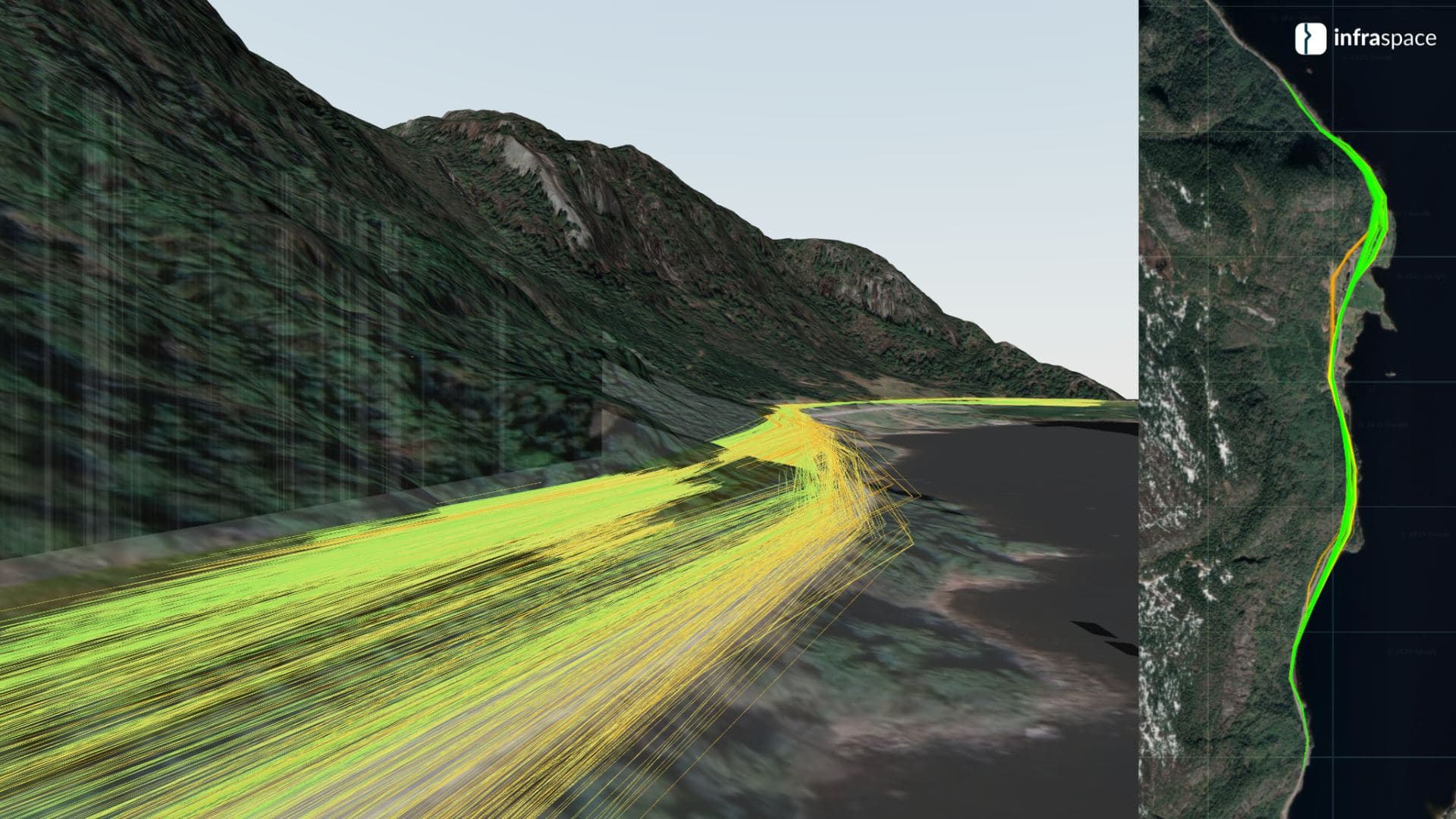
Some engineers are already able to create significantly more viable alternatives compared to traditional processes [7], [8]. Some engineers will give you answers instantly, others will get back to you in a few weeks with a report. That difference will become increasingly visible.
This point in time seems like a pivotal moment for engineers, where underinvesting in improving workflows seems a bit naive. The future of infrastructure design is not about replacing engineering judgment. It is about giving engineers sharper tools before the most important decisions are locked in.
What's next?
In the coming weeks, we will share more about what we have been building over the last five years, how the best engineers are already using it to create more value for their customers — and gain a competitive advantage [7], [8], [9].
Because the roads, railways, power lines and pipelines designed today will shape society for decades to come. The decisions we make in the early stages of the projects will have consequences for generations.
So let's improve this industry, by solving problems early — before we have to pay for them.